AI may
- explain a treated case in plain language
- compare evidence and point to disagreements
- draft questions, briefs, or follow-up notes
- adapt a verified explanation for another audience
- suggest missing evidence for a person to retrieve
 Shakti Seva StudioPublic records, treated with care.
Applied enterprise RAG
Shakti is a small reference architecture for a serious idea. Retrieve only the evidence needed for one case. Treat it before a model sees it. Let AI explain, compare, or draft. Keep the sources, tools, and final decision visible to a person.
The Shakti case
1 buildingbecomes one bounded evidence packet4 City sourcesarrive with dates and processing receipts0 AI decisionsin address matching, counts, privacy, or the next step1 optional AI jobexplain the treated packet for human reviewThe reusable pattern
Enterprise RAG becomes useful when retrieval follows the work and its permissions. Shakti does not send a model every housing record. It builds one small packet around the building a person chose.
Name the person, task, and result that matters.
Use an approved key to fetch only relevant evidence.
Normalize, redact, cap, and attach source receipts.
Let a model explain, compare, or draft within the packet.
Return the work and evidence to a person who decides.
The boundary is the product
Meaningful applied use cases
These are reference patterns, not finished Shakti features. Each one begins with a real task and ends with a person reviewing the work.
Retrieve: records tied to one building ID.
Amplify: explain the timeline and draft questions with citations.
Keep human: advocacy strategy, filing, and legal judgment.
Retrieve: current program rules and official service pages.
Amplify: compare options and explain what documents may be needed.
Keep human: eligibility decisions and applications.
Retrieve: agendas, minutes, votes, and named budget records.
Amplify: build a dated brief and surface unanswered questions.
Keep human: interpretation, public comment, and publication.
Retrieve: the assigned case, approved history, and current checklist.
Amplify: assemble the visit brief and flag conflicting evidence.
Keep human: findings, safety decisions, and enforcement.
Retrieve: one application and the approved rubric.
Amplify: map submitted evidence to rubric questions.
Keep human: scoring, funding, and conflict review.
Retrieve: current, approved policies for the person's role.
Amplify: answer with exact sections and state when policies conflict.
Keep human: exceptions, discipline, and policy changes.
Local AI and traced tools
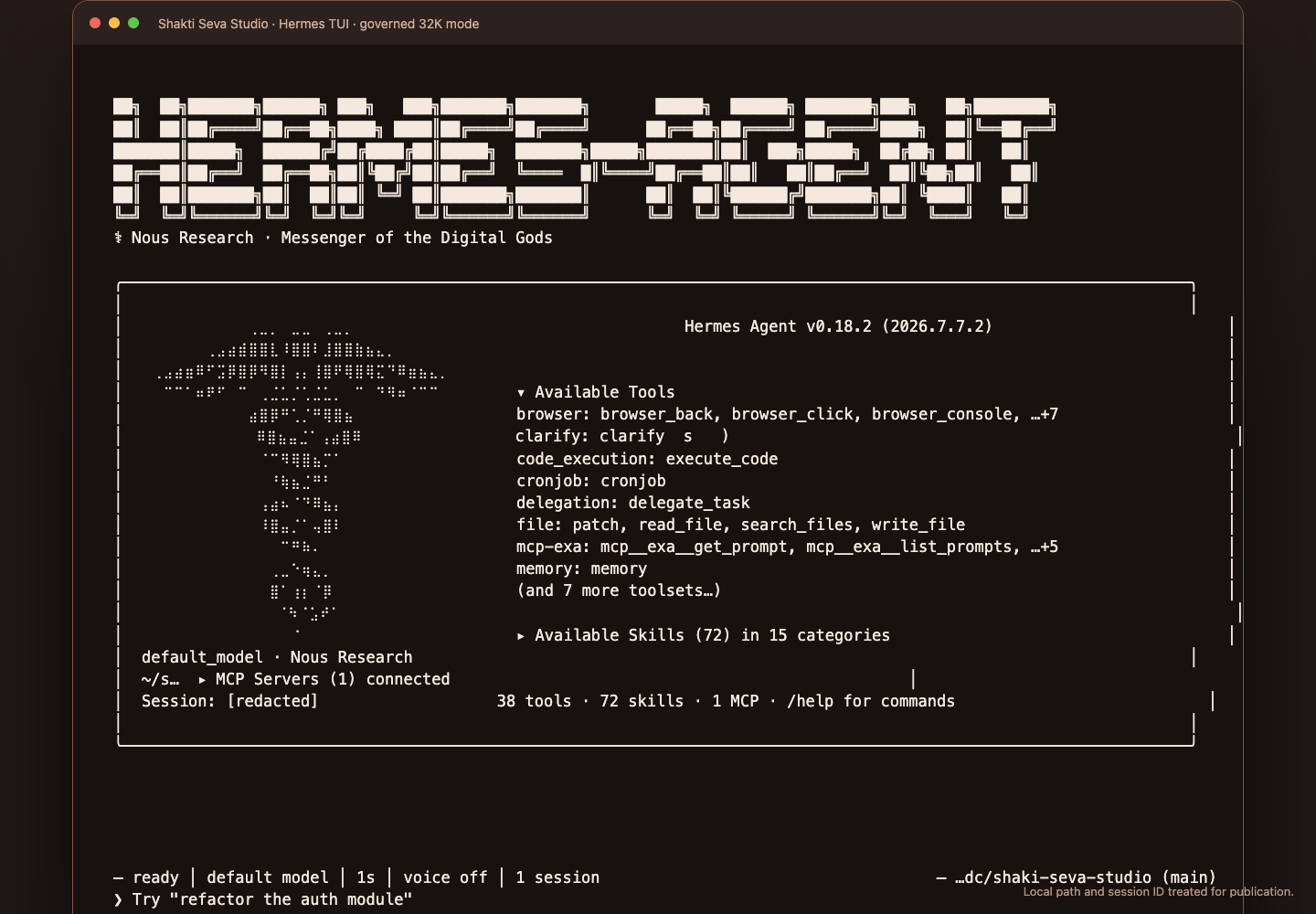
In the local research edition, Hermes receives the treated case packet. Its session is tagged, bounded to four turns, and separated from the public record lookup. The next engineering step is to relate each Hermes tool call to the Shakti trace without copying private content into the civic ledger.
Before calling it enterprise RAG